Ask a child what they remember about a family holiday and the answer is rarely the hotel lobby or the airport transfer. They remember the moment something big happened right in front of them.
A Tanzania safari with kids is built from those moments. An elephant calf takes an unsteady step beside the road. A lion lifts its head from the grass. A guide kneels in the dust and suddenly a set of footprints makes sense. Long after the souvenirs are packed away, those scenes stay with children.
At Permutours, we are an Arusha-based local safari company. We design private, flexible family journeys with experienced guides, sensible driving distances and support before, during and after the trip. This guide looks at what children actually take home from a safari — and how parents can make room for those memories.
Why These Memories Stay With Children
Children do not experience a safari the way adults do. Parents notice the itinerary, the lodge standard and the price. Children notice scale, sound, surprise and closeness. That is why a family safari feels less like sightseeing and more like stepping into a live story.
More than a holiday album
A beach gives a child one view for a week. Tanzania gives them changes every day: different parks, different animals, different light and different problems to solve. They learn to look, listen, wait and ask questions. Those skills travel home with them.
The best family safaris leave space for wonder. That means shorter drives, unhurried lunches and guides who explain things at a child’s pace. Our Tanzania Safaris are planned privately so your family can pause, return to the lodge or follow a sudden sighting without rushing.
1. Seeing Elephants for the First Time
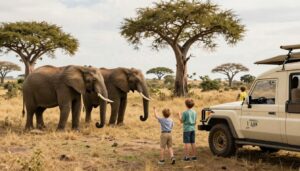
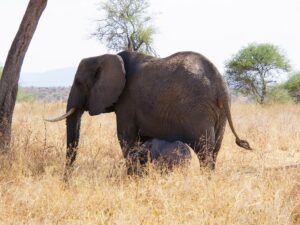
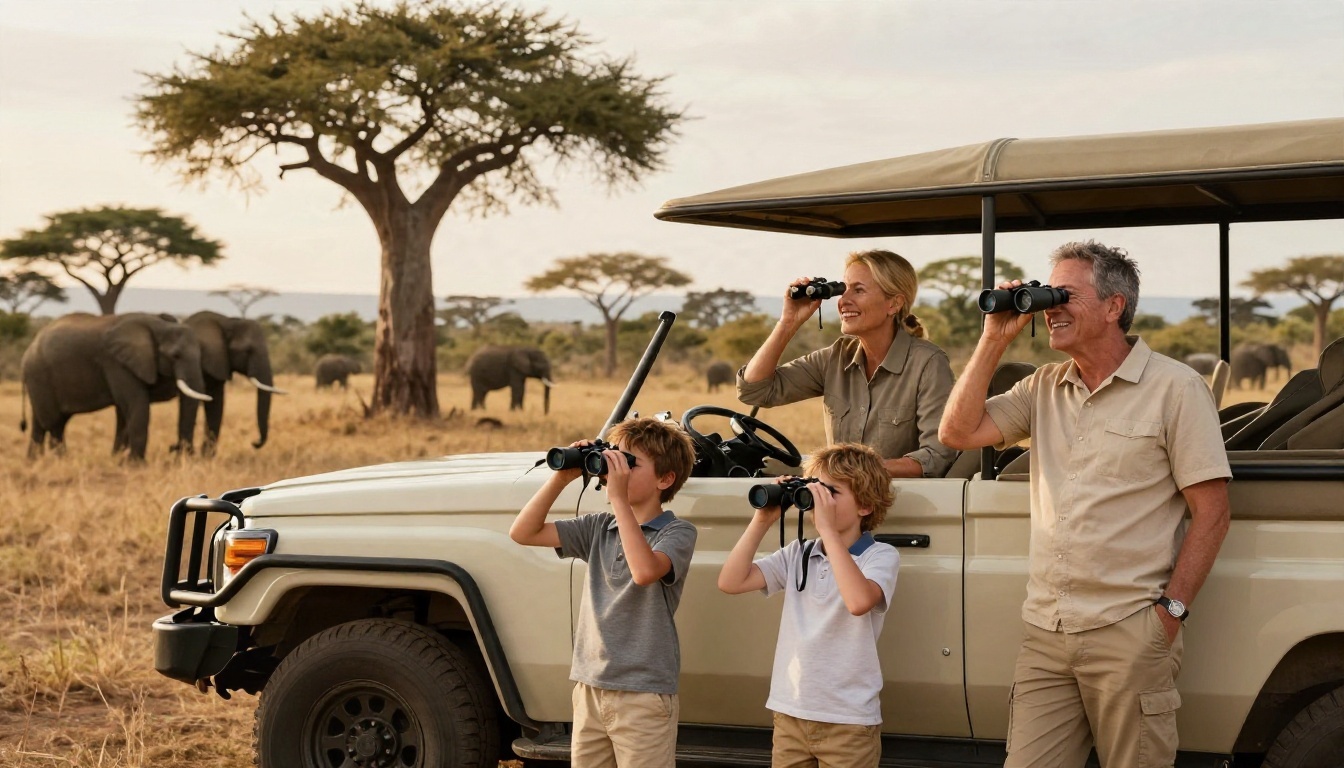
For many children, the first elephant is the event they will describe at school. Not because someone told them it was important, but because it is enormous, gentle and somehow quiet all at once. The vehicle stops. The dust settles. A calf stays close to its mother. Nobody speaks for a moment.
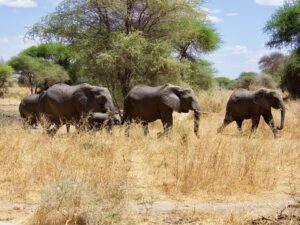
Tarangire National Park is especially good for this first encounter. Its ancient baobabs and large elephant herds make the scene feel almost prehistoric. Children quickly learn that elephants are not just big animals; they are family animals, with bonds, routines and personalities.
Why the first sighting matters
- Scale becomes real: a photograph cannot prepare a child for the size of an elephant beside an open vehicle.
- Empathy grows: watching a calf stay close to its mother changes how children talk about wildlife.
- Curiosity starts: questions about trunks, tusks, dust baths and elephant families come naturally.
That first sighting often becomes the family’s reference point for the rest of the trip. Later, when a zebra or giraffe appears, children compare it to the elephant moment. The safari has officially become theirs.
2. Spotting Lions in the Wild
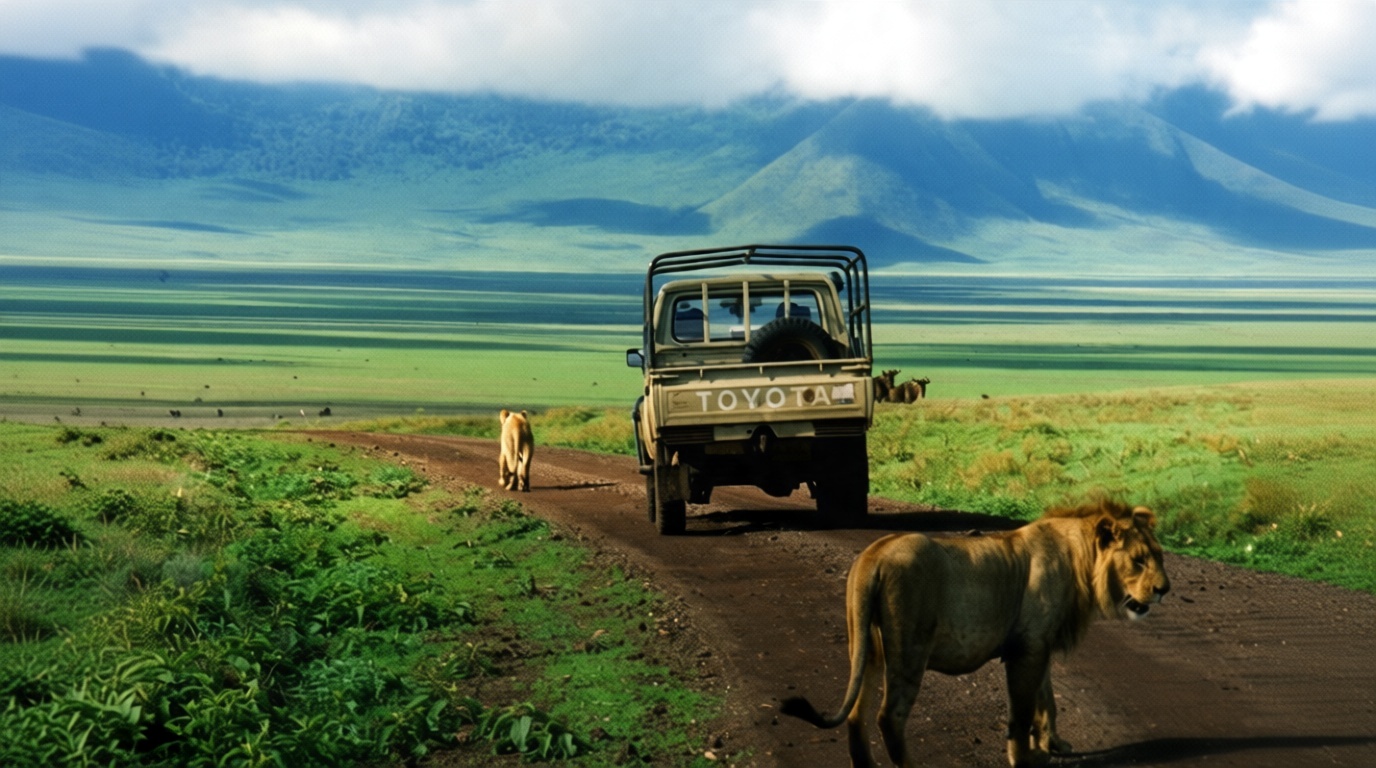
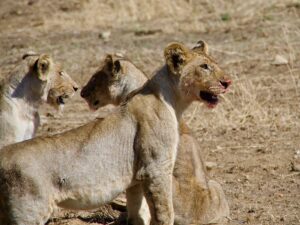
Lions are the moment children lean forward. They may be sleeping in a patch of shade, walking along a track or watching the vehicle with barely hidden interest. A good guide does not chase the scene. They read it, position the vehicle respectfully and give everyone time to take it in.
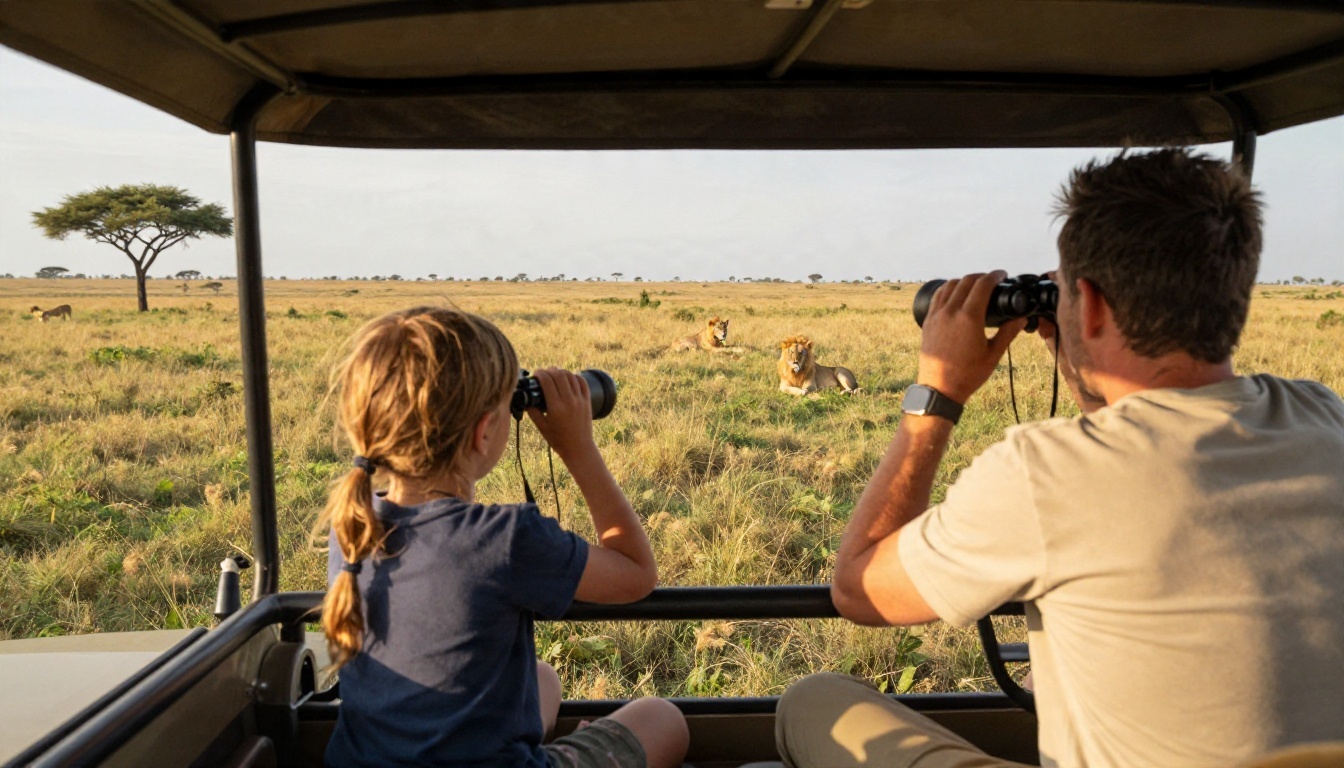
For children, a lion sighting is a lesson in patience as much as excitement. They learn to lower their voices, follow the guide’s cues and notice details: a tail flick, a change of direction, a cub hidden in the grass. It is active listening with a pulse.
How guides make lion sightings safe
- They keep a respectful distance and never surround a pride.
- They explain when to stay seated and when it is safe to stand.
- They give children binoculars so the experience feels close without getting too close.
On a Serengeti Safari, lions are never guaranteed — and that is part of the lesson. Waiting, scanning and finally seeing one makes the moment far more powerful than any scheduled show.
3. Learning About Animal Tracks
Ask a child to look for tracks and the whole safari changes. The road is no longer just a road. It is a message board written in dust. A guide points out a lion print, a hoof mark or the patterned trail of a tortoise, and suddenly the landscape has a hidden language.
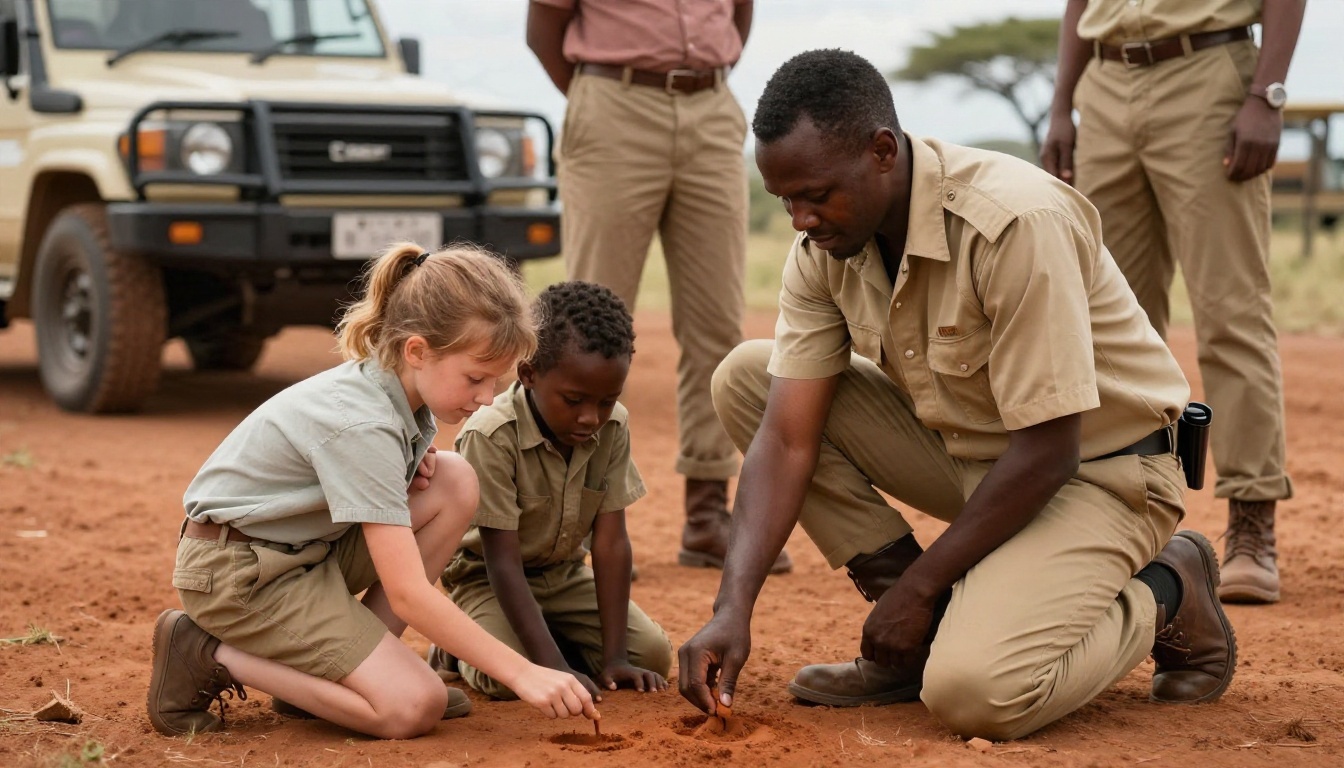
This is where a Tanzania safari with kids becomes genuinely educational. Children practise observation without worksheets. They compare shapes, ask why animals move at certain times and learn that every footprint belongs to a real life in a wider ecosystem.
From passengers to junior rangers
- Track detective work: children learn to tell prey from predator prints.
- Call recognition: guides explain bird calls, alarm calls and the meaning of silence.
- Conservation lessons: children understand why parks, anti-poaching work and local communities matter.
Parents often say this is the surprise highlight of the trip. The big animals get the applause, but the quiet tracking lesson is what children repeat at dinner.
4. Meeting Local Communities
A safari is not only about wildlife. Tanzania’s people are part of the landscape too. A respectful community visit gives children a chance to understand that the parks they love sit alongside real towns, schools, farms and families.
At Permutours, we favour community experiences built on consent and fairness. That means visiting places where hosts welcome guests, explaining what you are seeing and avoiding performances that turn people into exhibits. Children notice sincerity. A conversation with a Maasai host, a look inside a classroom or a visit to a local craft cooperative can be more memorable than another gift shop.
Respect at the centre
Prepare children with simple rules: ask before taking photographs, listen more than they speak, and understand that a different way of life is not a costume. When approached this way, a cultural visit becomes a lesson in dignity, not just difference. It is one of the quiet ways a family safari changes how children see the world.
5. Watching African Sunsets
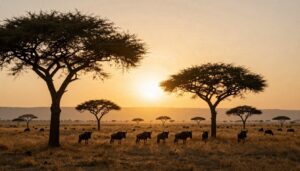
There is a particular hush at the end of a safari day. The light turns amber, the shadows stretch and the animal activity changes. Children who spent the afternoon scanning the bush often go quiet too. It is not boredom. It is absorption.
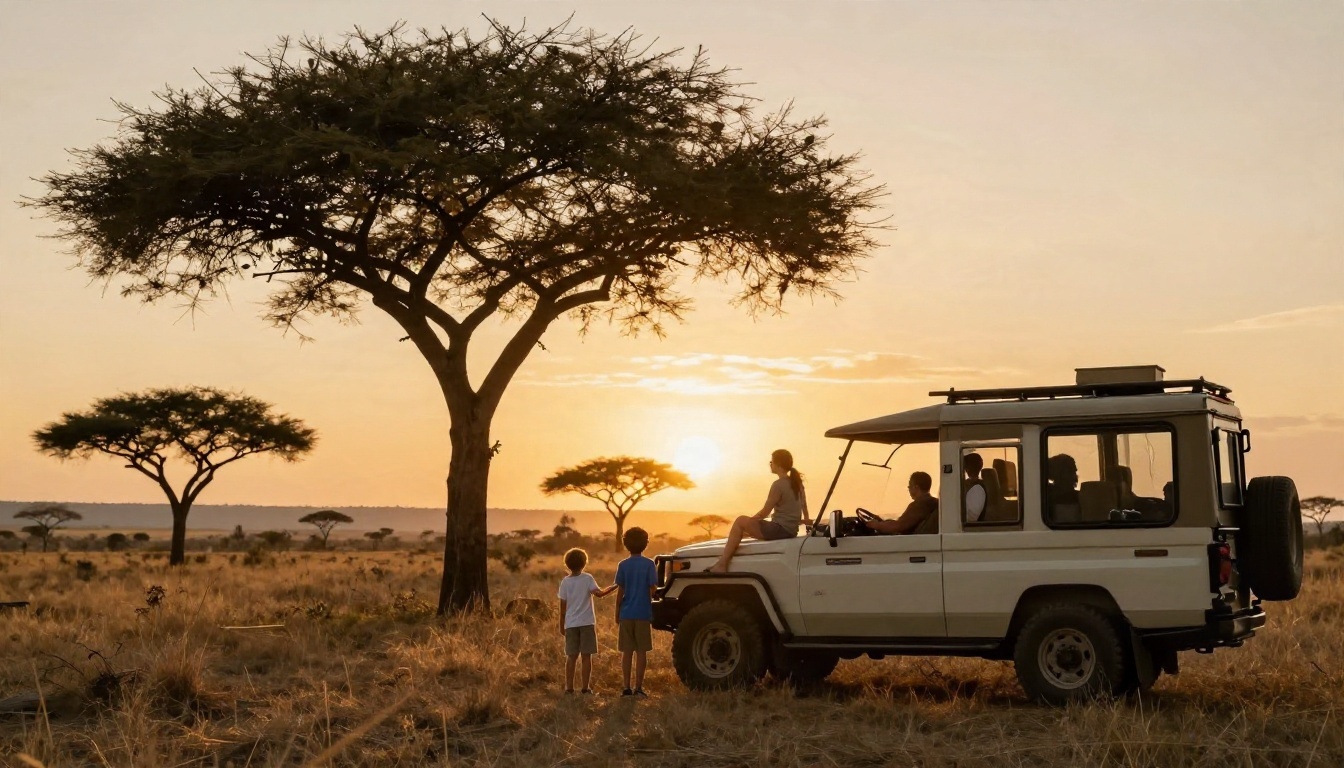
Watching the sun go down from the vehicle, a hilltop or the lodge terrace gives families a natural pause. No one is asking for the next activity. The day can be retold: the elephant, the lion, the track, the funny moment when someone forgot their binoculars.
The five-minute pause
You do not need a speech. Sit together, point out the colour change and let the silence do the work. These small pauses are often what children remember as “the calm bit” — proof that a safari is not only adrenaline, but belonging.
6. Sleeping in a Safari Lodge
For many children, the lodge is part of the adventure. Canvas sides, creaking floors, a lantern outside the tent and the sound of insects after lights out make bedtime feel different. Even a comfortable family suite can feel wonderfully wild.
Comfort that still feels wild
- Family rooms and suites: flexible layouts help parents and children rest properly between early drives.
- Early meals and packed breakfasts: game drives start before sunrise, so lodges plan around families.
- Pools and safe spaces: downtime matters as much as wildlife time.
- Guides who understand children: the right guide adjusts the pace, stories and stops.
Good family lodges do not try to turn children into adults. They make the wild accessible without removing its magic. Parents sleep better knowing transfers, meals and room arrangements are already handled by their local operator.
7. Discovering the Big Five
The Big Five — lion, elephant, leopard, rhino and buffalo — gives families a simple game to play across the trip. Children love a checklist, and Tanzania delivers the full cast across serious wildlife country. The Serengeti offers cats and vast herds. Ngorongoro Crater is one of the strongest places to look for rhino. Tarangire is famous for elephants and buffalo.
A checklist with patience
Explain that the Big Five is a historic term, not a ranking of importance. A giraffe, zebra, cheetah or hornbill can be just as thrilling. Keep the list playful rather than competitive, and children will enjoy every sighting instead of feeling disappointed if one species stays hidden.
When they do tick off all five, the pride is unforgettable. But the deeper lesson is patience: the best sightings come to families who look carefully, travel with skilled guides and accept that nature keeps its own schedule.
8. Making New Family Memories
What children remember most is rarely a perfect photograph. It is the shared joke, the sibling who spotted the leopard first, the grandparent who stayed up for the sunset, the guide who knew their name by day three. A Tanzania safari with kids creates a family language that lasts.
Stories that outlast the trip
Years later, “Remember the elephant in Tarangire?” can restart a conversation instantly. Children who travelled young often grow into the most committed conservation supporters in the family, because they met the wild before they learned to take it for granted.
That is the real return on a family safari. You are not just buying a holiday. You are giving children a set of shared stories that belong to everyone who was there.
Sample 10-Day Family Safari Itinerary
This sample route balances wildlife, rest and a manageable pace. It can be adjusted for ages, school holidays and budget. Domestic flights save time, while an overland version works well for families who prefer a slower journey.
Days 1–2: Arrive in Arusha and ease in
Land at Kilimanjaro International Airport and transfer to Arusha. Meet your Permutours guide, review the plan, check vehicle seats and enjoy a relaxed first evening. The next day introduces Tarangire National Park with a gentle half-day game drive, perfect for first-timers.
Days 3–5: Serengeti National Park
Travel into the Serengeti and base yourself in a family-friendly camp or lodge. Early morning drives target lions, giraffes and elephants. Afternoons leave room for rest, swimming or a shorter loop. Your guide chooses the area based on the season and current wildlife movement.
Day 6: Ngorongoro Crater
Descend into the crater for a full-day drive with a picnic lunch. It is one of the best places for dense wildlife viewing and a realistic Big Five attempt. Overnight on the crater rim or in Karatu, where families often appreciate the cooler air.
Days 7–10: Zanzibar Holidays
Fly to the coast for three or four nights of rest. Explore Stone Town, take a spice tour, enjoy a sunset dhow and spend time swimming and snorkelling. Our Zanzibar Holidays pair naturally with safari because they give children a slower ending after several early starts.
Practical Tips for a Family Safari with Kids
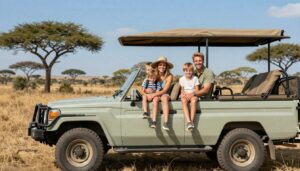
- Choose a private vehicle: you control pace, stops and meal breaks.
- Brief children before each drive: explain what they might see and the simple safety rules.
- Bring binoculars and a notebook: both make children feel like real explorers.
- Pack layers and snacks: mornings are cool, days are warm and drives take time.
- Book with a local operator: local knowledge turns a good route into a smooth family holiday.
A Tanzania safari with kids does not need to be luxury to be life-changing. It needs thoughtful pacing, honest advice and guides who see children as curious travellers, not passengers to tolerate.
Frequently Asked Questions
1. What age is best for a Tanzania safari with kids?
There is no single perfect age, but many families find six and upwards ideal because children can sit through drives and remember the experience clearly. Younger children can also enjoy a safari with shorter drives, family rooms and flexible days. Tell us your children’s ages and we will recommend a suitable pace.
2. Will children get bored on long game drives?
Usually the opposite happens when drives are well designed. We keep first drives short, give children binoculars and ask guides to explain tracks, calls and behaviour. Private vehicles also allow snack breaks and a return to the lodge when attention naturally runs out.
3. Is a Tanzania safari safe for families?
Yes, when planned with reputable operators and respected guides. Vehicles, park rules and lodge standards are designed around visitor safety. Your guide manages distances from wildlife and road conditions, while your family follows a few simple instructions such as staying seated unless invited to stand.
4. Can we combine a family safari with Zanzibar?
Absolutely. A 10-day trip usually works well with five to six days on safari and three to four on the coast. Domestic flights make the switch smooth, and Permutours coordinates all transfers, flights and lodge bookings as one itinerary.
5. What should we pack for a Tanzania safari with kids?
Bring neutral layers, a warm jacket for early drives, sun protection, comfortable closed shoes, refillable water bottles, medications, snacks and binoculars. A small notebook is useful for animal sightings. Avoid loud colours on game drives and pack light where possible.