Serengeti vs Maasai Mara
Serengeti vs Maasai Mara: Which Safari Should You Choose?
Two legendary ecosystems, two very different safari experiences. We compare wildlife, the Great Migration, crowds, camps, cost and family-friendly logistics – from a local Arusha perspective.
Compare Your Safari Options With a Local Expert
Explore the Serengeti
Ask almost anyone to picture an African safari and they will describe the Serengeti or the Maasai Mara. Both are part of the same vast migration ecosystem, both deliver extraordinary wildlife, and both can be visited on a first trip to East Africa. So how do you choose?
We are Permutours, a local safari company based in Arusha, Tanzania. We work in the Serengeti every week and we know the Maasai Mara well through our guests and partners across the border. This guide is a balanced, practical comparison – not a sales pitch – with the details that actually affect your holiday.
Quick Answer: Serengeti vs Maasai Mara – which is better?
Neither is universally better. Choose the Serengeti if you want a vast, less crowded park, the migration inside Tanzania for much of the year, excellent value and easy combinations with Ngorongoro Crater and Zanzibar. Choose the Maasai Mara if you want very high wildlife density in a compact area, short transfers from Nairobi and famous July-to-October river crossings. For most first-time visitors, families and photographers, the Serengeti offers more space, more variety and better value over a week or more.

Overview of Serengeti and Maasai Mara
It helps to start with the geography, because the two parks are closer than most people realise. The Serengeti-Mara ecosystem spans roughly 30,000 square kilometres across northern Tanzania and southwestern Kenya. The Serengeti is the Tanzanian portion; the Maasai Mara is the Kenyan portion. Animals move freely between them, and the Great Migration does not stop at a border post.
Serengeti at a glance
The Serengeti covers about 14,750 square kilometres, making it roughly fifteen times the size of the Maasai Mara. It is Tanzania’s oldest national park and a UNESCO World Heritage Site. The landscape ranges from southern short-grass plains to central woodlands and the rocky, river-crossed north. Because it is so large, you can spend a week here without repeating the same drive.
Maasai Mara at a glance
The Maasai Mara National Reserve is compact by comparison, around 1,500 square kilometres, with adjoining conservancies adding more private game-viewing area. Its reputation rests on outstanding wildlife density, especially during the dry season when animals concentrate near the Mara River. It is a short flight or a long road transfer from Nairobi, which makes it a favourite for short trips.
The key difference
Think of the Serengeti as space and variety, and the Mara as concentration and convenience. Neither is inferior; they simply suit different trips. The rest of this guide breaks that down by the things travelers actually care about.
| Factor | Serengeti (Tanzania) | Maasai Mara (Kenya) |
|---|---|---|
| Size | Approx. 14,750 sq km | Approx. 1,500 sq km reserve plus conservancies |
| Best for | Depth, space, migration across seasons | High density, short trips, river crossings |
| Typical stay | 3-5 nights | 2-3 nights |
| Park fees | Higher daily conservation fees | Generally lower reserve fees |
| Crowds | Low relative to size | High in peak dry season |
| Easy combinations | Ngorongoro, Tarangire, Zanzibar | Nairobi, Amboseli, beach extensions |
Wildlife Comparison
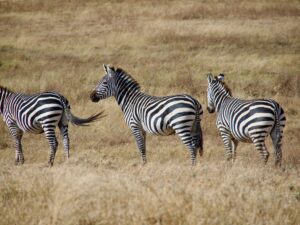
Both parks deliver the animals people dream of: lions, leopards, elephants, buffalo, giraffes, zebras and hundreds of bird species. The difference is less about which species are present and more about how you see them.
Big cats and predators
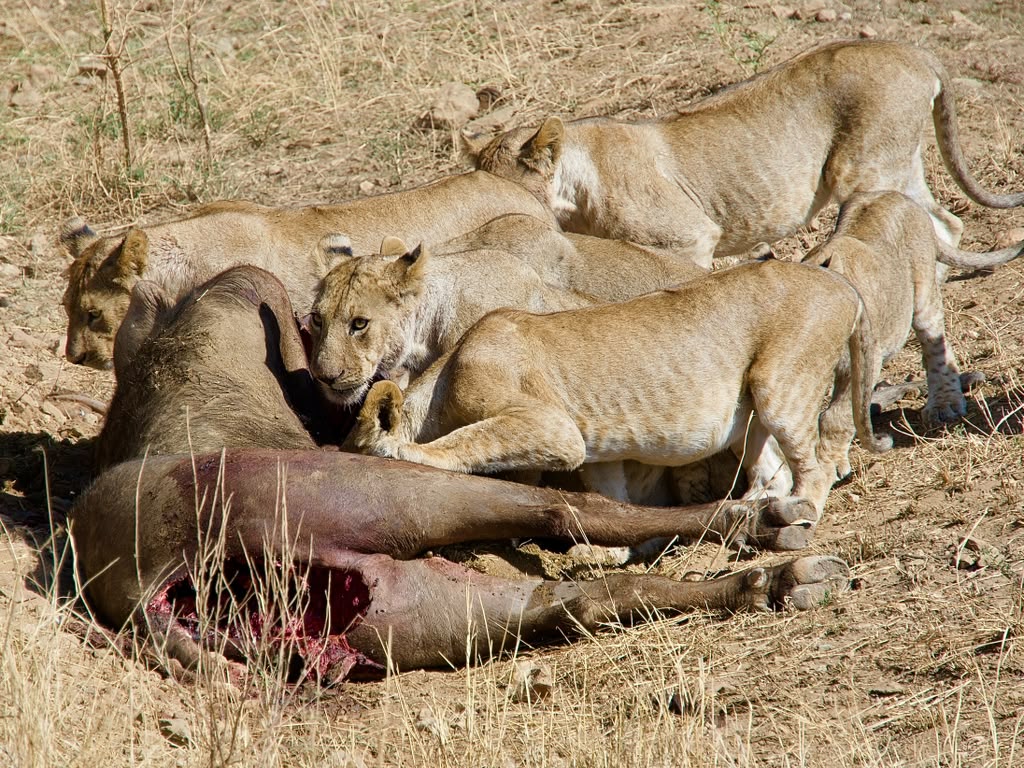
The Serengeti is one of the best places in the world for lions, with large prides across the central and southern plains. Leopards are regularly seen around the wooded areas and riverine belts, and cheetahs hunt the open grasslands. The Mara also has exceptional cat sightings, particularly in the dry season, and its conservancies are known for good leopard photography.
Herbivores and birdlife
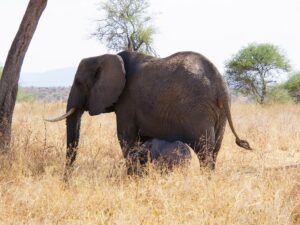
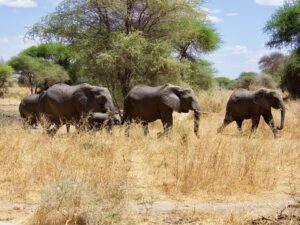
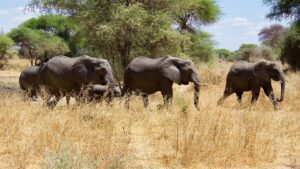
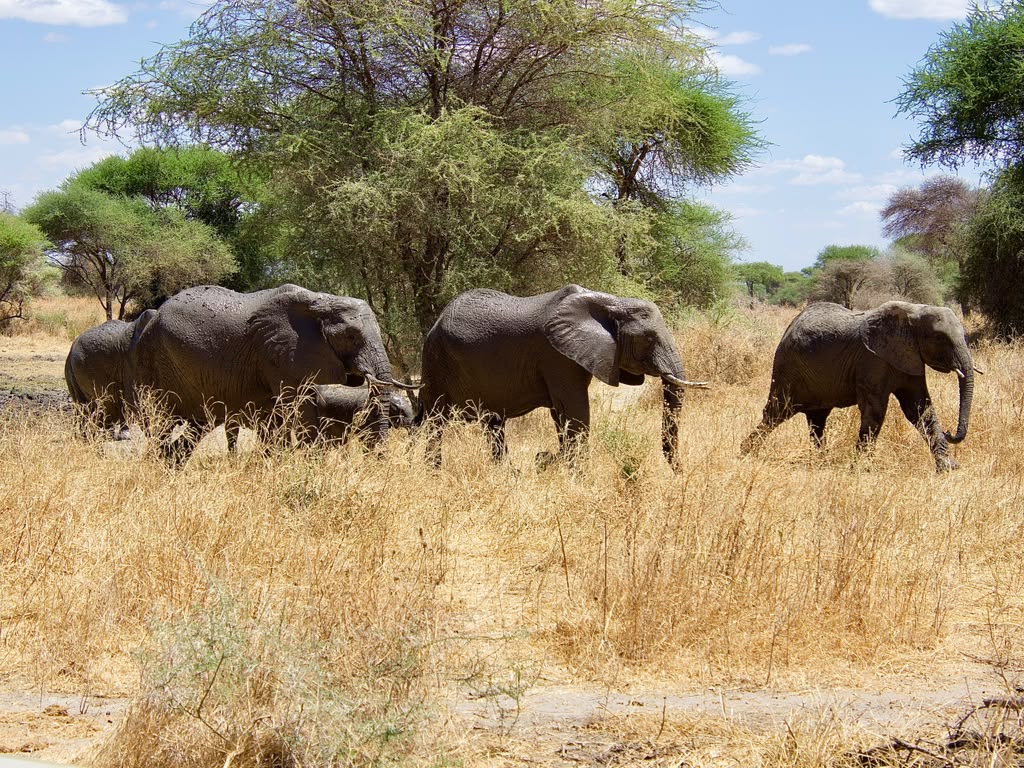
Wildebeest and zebra define the migration, but the Serengeti also holds substantial resident populations of giraffe, elephant, buffalo, antelope and ostrich. Birders find an enormous range of species across the different habitats. The Mara’s resident wildlife is similarly impressive, and its smaller size can mean more encounters in a single day.
Year-round resident wildlife
This is where the Serengeti’s size becomes a real advantage. Because the ecosystem is so large, there are always resident animals in the area you are visiting, even when the migrating herds are elsewhere. In the Mara, wildlife is excellent year-round, but the seasonal concentration of animals is more pronounced.
Serengeti pros
- Enormous variety of habitats
- Larger prides and wide-open scenes
- Fewer vehicles relative to area
- Great resident wildlife all year
Serengeti cons
- Longer drives between regions
- Higher park and conservation fees
- More planning needed
Mara pros
- Very high wildlife density
- Short transfers from Nairobi
- Excellent dry-season sightings
- Strong conservancy model
Mara cons
- Busy in peak season
- Fewer days needed, less variety
- Fees can add up quickly
Great Migration Experience
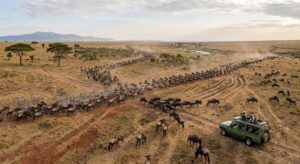
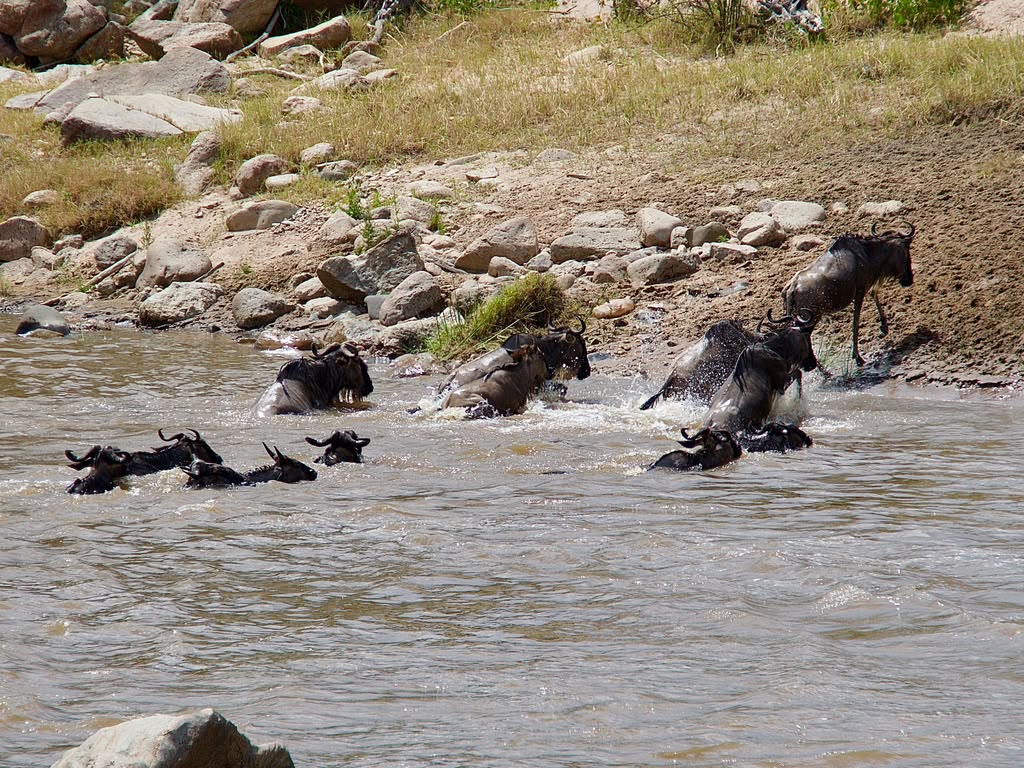
The Great Migration is the single biggest reason people choose either destination. Around 1.5 million wildebeest and hundreds of thousands of zebra move in a continuous circle, following rain and fresh grass. The herds spend roughly half the year in Tanzania and the other half in Kenya.
Where the herds are by season
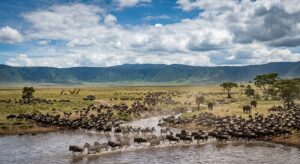
January to March is calving season on the southern Serengeti plains and around Ndutu, where thousands of calves are born within weeks. April and May see herds moving north and west. June and July bring the western corridor crossings. July to October is the northern Serengeti and Mara River crossing period. November and December see the herds moving back south into Tanzania.
River crossings in Tanzania and Kenya
The famous crocodile-filled crossings happen at the Mara River, which runs through both the northern Serengeti and the Maasai Mara. Travelers on a Tanzania safari can watch crossings from the Serengeti side, often with fewer vehicles than the Kenyan side. Mara guides know the crossings intimately and can position vehicles well, but peak-season crowds are real.
Why timing changes the answer
If your trip is in January or February, the Serengeti is the clear choice for calving season. If it is August or September, both parks can be excellent for crossings, and the decision comes down to crowd tolerance, budget and how many days you have. Our detailed Great Migration guide explains the monthly movements.
Landscape and Scenery
Photographers and first-time visitors often underestimate how different the two landscapes feel.
Serengeti’s variety
The Serengeti is far more than flat grassland. The south has short-grass plains and scattered acacias. The central area has woodlands, kopjes and the Seronera valley. The north has rocky hills, riverine forest and dramatic river bends. The western corridor has the Grumeti River and dense bush. A single week can feel like four different safaris.
Mara’s compact plains
The Mara is quintessential savanna: rolling grasslands, acacia trees and the winding Mara River, with the Oloololo Escarpment providing a striking backdrop. It is beautiful and wonderfully photogenic, but visually more consistent than the Serengeti.
Safari Crowds and Visitor Experience
Your experience of a park is shaped as much by other vehicles as by the animals.
Vehicle density
Because the Serengeti is roughly fifteen times larger, even busy areas feel spacious. You can drive for an hour without seeing another vehicle. In the Mara, especially from July to October, popular crossings and sightings can attract dozens of vehicles. The conservancies help by limiting numbers and offering more exclusive access.
Pace and privacy
On a private guided safari, your driver can wait for a quiet moment, move away from a crowd or stay longer at a sighting. That flexibility matters more in a busy season. If privacy and a slow pace are priorities, the Serengeti gives you more room to find your own corner of the bush.
Accommodation Options
Both destinations offer everything from simple camps to world-class luxury lodges. The difference lies in location, variety and how the stay is integrated into the wider trip.
Serengeti camps and lodges
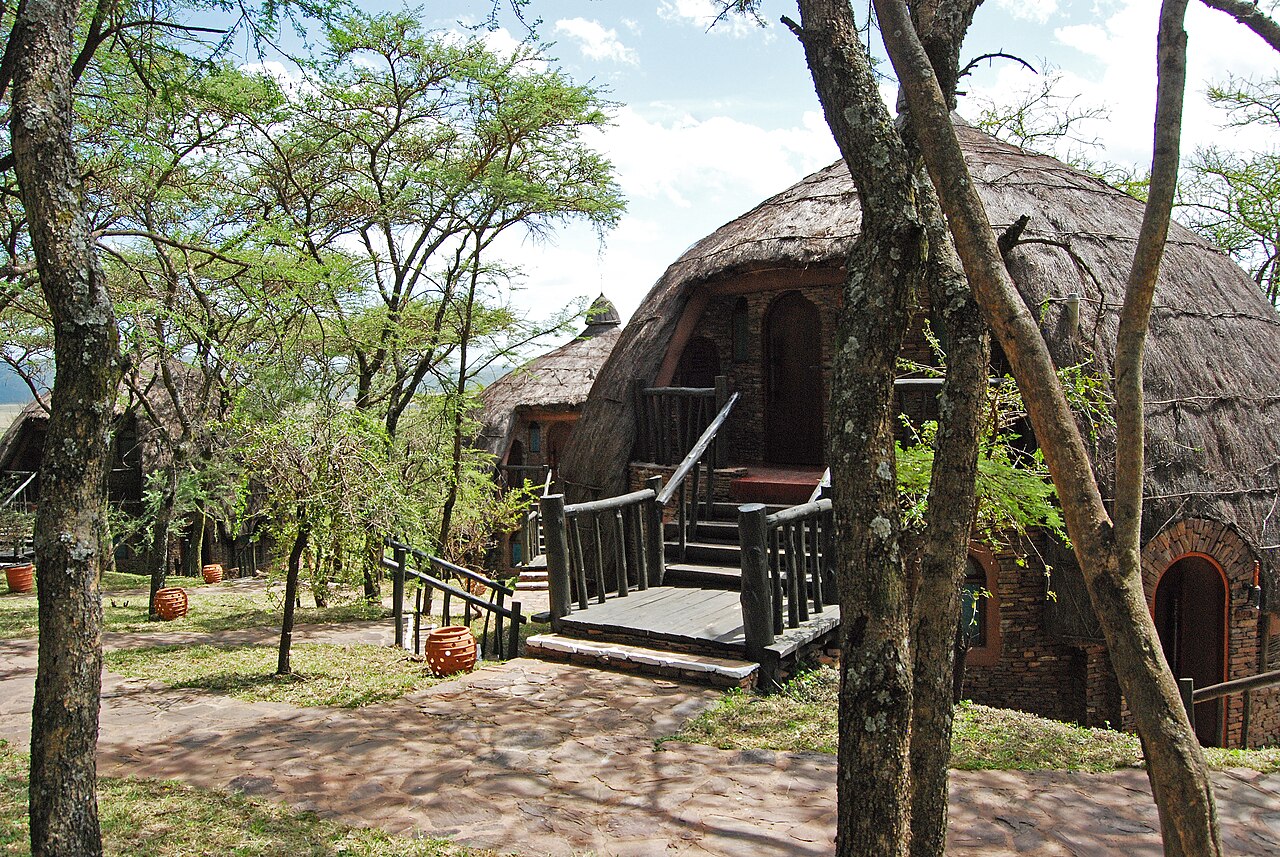
The Serengeti has a wide range of permanent lodges, tented camps and seasonal mobile camps. Mobile camps follow the herds, which means you can sleep close to the migration wherever it goes. Camps are spread across different regions, so you can plan a route that changes scenery every couple of days.
Mara camps and conservancies
The Mara has excellent luxury lodges and tented camps, many inside private conservancies where vehicle numbers are controlled and activities such as night drives and guided walks may be available. Standards are high, and the compact size means short drives between camp and wildlife.
What suits different travelers
Luxury travelers often love the Serengeti for its space and the choice of camps by season. Families tend to prefer fewer moves and camps with family rooms, whichever country they choose. Photographers should prioritise location over star rating in both parks.
Family Safari Comparison
Both parks can be wonderful for families, but logistics differ.
Child-friendly logistics
Shorter drives are easier with young children, which gives the Mara an advantage for very short trips. However, the Serengeti’s size means you can choose a base close to the wildlife for your dates and avoid long daily transfers. Many Serengeti camps offer family rooms, early meals and flexible game drives, and Tanzania safaris pair naturally with a beach finish on Zanzibar.
Practical considerations
Check age restrictions for game drives and walking activities, ask about family rooms, and build in downtime. Both countries have entry requirements that can change, so confirm visa and health advice for your nationality before booking. Our family safari and Zanzibar itinerary shows how a child-friendly route can be paced.
Photography Opportunities
For wildlife photographers, the choice often comes down to composition and light rather than the animals themselves.
Light and compositions
The Serengeti’s open plains give you clean backgrounds, big skies and the chance to photograph animals in a vast landscape. Kopjes and acacias provide classic frames. The Mara offers dense scenes, river crossings and the dramatic escarpment, with animals close enough for tight portraits.
Practical photography notes
Most camps in both destinations offer photographic vehicles or private guiding if arranged in advance. Drone rules differ between Tanzania and Kenya and change over time, so always confirm current regulations before travelling with one. Bring dust protection for lenses, extra batteries and a telephoto lens for both.
Get a Free Custom Safari Recommendation
Not sure which park fits your dates, budget and travel style? Send us your details and we will compare Serengeti and Mara options honestly, with a clear recommendation and no obligation.
Cost Comparison
Costs are rarely like-for-like, so a simple “which is cheaper” answer can mislead.
Park fees
Tanzania’s Serengeti and Ngorongoro conservation fees are substantial, and the Serengeti fee is higher than the Maasai Mara reserve fee. Kenya’s conservancy fees add to the Mara cost, especially at luxury camps. Over a multi-day trip the difference can be meaningful, but it is only one line in the budget.
What your money buys
A Serengeti safari usually includes a private vehicle and guide, park fees, accommodation and meals. Internal flights from Arusha to the Serengeti add cost but save a full day of driving. In the Mara, many itineraries include a flight from Nairobi and conservancy fees that support local landowners.
Value over headline price
Look at what is included, how many game drives you get, whether the guide is private, and how much time you spend travelling. A cheaper headline price that excludes park fees or uses shared vehicles can cost more in the end. Our guide to Tanzania safari costs explains the breakdown.
Which Destination Is Best for First-Time Visitors?
This is the question we are asked most often, and the honest answer depends on your trip length and priorities.
Choose the Serengeti if…
- You have five or more days and want depth rather than a quick taster
- You value space, fewer vehicles and a slower pace
- You are travelling in calving season or want the migration inside Tanzania
- You want to combine the safari with Ngorongoro Crater and Zanzibar
- You are a family or photographer who benefits from flexibility
Choose the Maasai Mara if…
- You have only two or three days for a safari
- You are flying in and out of Nairobi and want minimal transfer time
- You are travelling in the dry season and want very high wildlife density
- You want to stay in a private conservancy with night drives and walks
For most first-time visitors planning a proper week-long safari, we recommend the Serengeti. It gives you more variety, more space and a natural route that includes other iconic Tanzania destinations. If your time is short, the Mara is a fine choice – and a good introduction to the migration ecosystem.
Why Choose a Serengeti Safari with Permutours
We are based in Arusha, on the doorstep of Tanzania’s northern circuit. Our guides and planners work in the Serengeti throughout the year, so our advice is based on what is happening now rather than a generic guidebook.
Local Arusha expertise
We know which part of the Serengeti holds the herds in your travel month, which camps are in the right location, and how to avoid the busiest routes. We monitor road conditions and park changes, and we adjust itineraries when conditions shift. That is firsthand local knowledge you cannot get from a comparison article alone.
Personalised safari planning
We do not sell a fixed product. We start with your dates, group, budget and interests, then build a route around them. That might mean three nights in the southern Serengeti for calving season, or a northern circuit that combines the Serengeti with the Ngorongoro Crater and ends on Zanzibar. Browse our Tanzania safari tours and our Serengeti vs Ngorongoro comparison for more ideas.
Request Your Free Tanzania Safari Quote
Choose your safari with local advice, not guesswork. Tell us your dates, group size and priorities, and we will send a tailored recommendation with honest timings and clear pricing.
Compare Your Safari Options With a Local Expert
View All Trips
Conclusion
Serengeti vs Maasai Mara is not a contest with one winner. The Mara is compact, convenient and outstanding in the dry season. The Serengeti is vast, varied, less crowded and better suited to a longer, deeper safari with the migration in Tanzania for much of the year. For first-time visitors, families, couples and photographers with a week or more, the Serengeti usually offers the richer experience – especially when paired with Ngorongoro Crater and a Zanzibar beach finish.
Ready to decide with real local input? Contact Permutours and let our Arusha team recommend the right safari for your dates.
Frequently Asked Questions
Which is better for a first safari, Serengeti or Maasai Mara?
For a first safari with five or more days, the Serengeti is usually the better choice. It offers more space, a wider range of habitats, fewer vehicles and the chance to combine with Ngorongoro Crater and Zanzibar. The Maasai Mara is excellent if you only have two or three days and are flying in and out of Nairobi, because transfers are shorter and wildlife density is very high.
Are the Serengeti and Maasai Mara the same ecosystem?
Yes. They are two protected areas within the same Serengeti-Mara ecosystem, which spans northern Tanzania and southwestern Kenya. Wildebeest and zebra move freely between them as part of the Great Migration. The border does not affect the animals, but it does affect park fees, regulations and which operator you book with.
Which park is better for the Great Migration?
It depends on the month. January to March is calving season in the southern Serengeti, making Tanzania the clear choice. July to October is river-crossing season along the Mara River, and both parks can be excellent. From November to December the herds move back south into Tanzania. Tell us your dates and we will tell you where to be.
Is the Maasai Mara too crowded?
In peak dry season, popular sightings and river crossings can attract many vehicles. Private conservancies limit numbers and offer a quieter experience, and outside peak months the Mara can feel peaceful. The Serengeti’s sheer size means it generally feels less crowded, even in high season.
Which destination is better for families?
Both work well. The Mara has shorter drives, which helps with very young children. The Serengeti offers more space, a wider choice of family-friendly camps and the option to combine the safari with Zanzibar beach time. Many families prefer the Serengeti because the pace is calmer and there is more to see over a full week.
Is the Serengeti more expensive than the Maasai Mara?
Serengeti park fees are higher than the Maasai Mara reserve fee, so the daily cost can be greater. However, total trip cost also depends on flights, camp choice, guide, season and internal transfers. Kenya’s private conservancies also charge fees. Ask for a fully itemized quote before comparing prices.
Which park offers better wildlife photography?
Both are world class. The Serengeti suits wide landscape compositions, big skies, large prides and the chance to stay in one region long enough to understand the light. The Mara offers dense wildlife scenes, dramatic river crossings and close portraits, especially in the dry season. Your dates and subject matter more than the park name.
Can I visit both the Serengeti and the Maasai Mara on one trip?
It is possible but inefficient for most holidays. You would need extra nights, border crossings and additional flights, and much of the wildlife experience would overlap. A better plan is to explore the Serengeti in depth and add Ngorongoro Crater or Zanzibar. If you want both countries, allow at least ten to twelve days.